
You’ve just received your BC Assessment notice. Your Burnaby home is assessed at $950,000, but your neighbour just sold for $1.3M. What’s the deal with that?
If you’re wondering why these numbers don’t match up, you’re not alone. Every January, property owners across British Columbia receive their BC Assessment notices, and many are left scratching their heads about what these values actually mean — especially when they look very different from what homes in the neighbourhood are selling for.
This guide will help you understand what BC Assessment value is, how it differs from market value, and why it matters when you’re buying or selling a home in Metro Vancouver.
Key Summary
Before we dive into the details, here are the key points you need to know:
- BC assessed value is set annually by BC Assessment as of July 1st of the previous year. It is NOT the same as what your home would sell for today.
- Assessed value is primarily used to calculate property taxes, not to set a listing price.
- In Metro Vancouver, market value is often higher than assessed value (sometimes significantly).
- Buyers and sellers should use market value — determined by recent comparable sales — as their pricing guide.
- Assessment notices are a useful data point, but should not drive negotiation on their own.
What is BC Assessment?
BC Assessment is a provincial Crown corporation responsible for producing independent property assessments across British Columbia. Every year, BC Assessment sends property owners a notice showing the assessed value of their property as of July 1st of the prior year.
The organization operates under provincial legislation. It is governed by the Assessment Act and the Assessment Authority Act. Their primary role is to ensure fair and equitable property taxation across the province by providing consistent property valuations.
Assessment notices typically arrive in January each year. The key date to remember is July 1st of the previous year — this is when your property’s value is determined. So if you receive your notice in January 2026, the assessed value reflects what BC Assessment believes your property was worth on July 1st, 2025.
You can find your own assessed value and view assessment information for any property in BC by visiting bcassessment.ca and using their online e-valueBC tool.
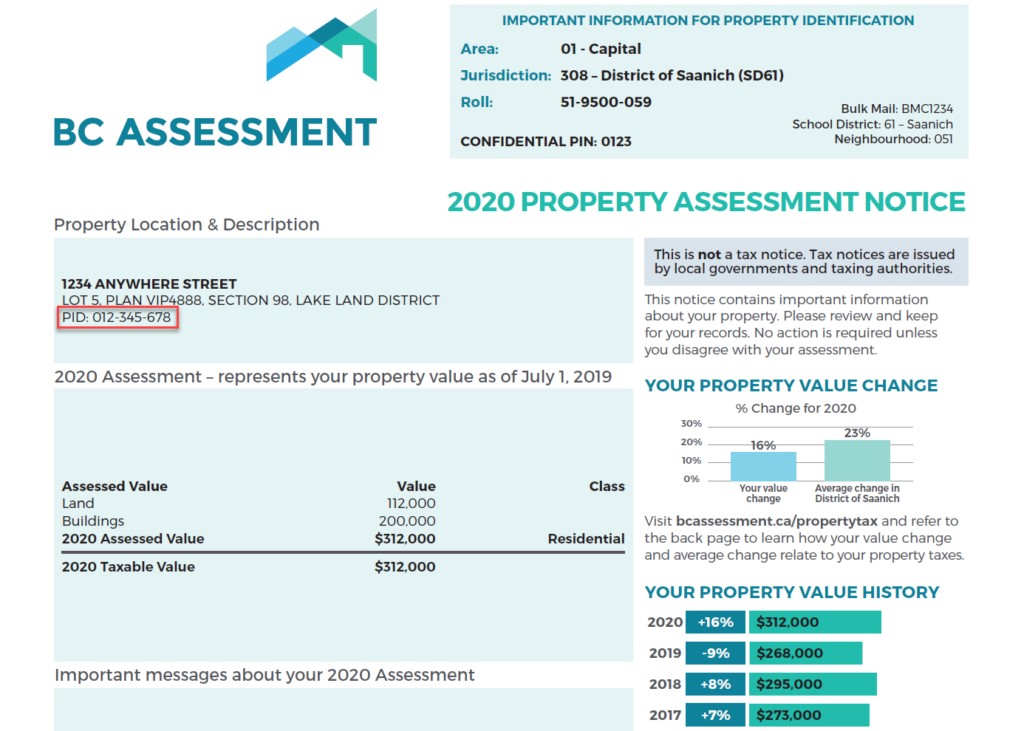
Example BC Assessment Document
How to Find the Assessed Value of a Property in BC
Looking up assessed values is straightforward and completely free. Here’s how:
- Visit bcassessment.ca
- Enter the property address in the search bar
- View the assessment roll summary, which shows the current assessed value
This information is publicly available, which means buyers can look up the assessed value of any property they’re considering purchasing. The website also shows prior years’ assessed values, which can be useful for spotting trends in a particular neighbourhood or property type over time.
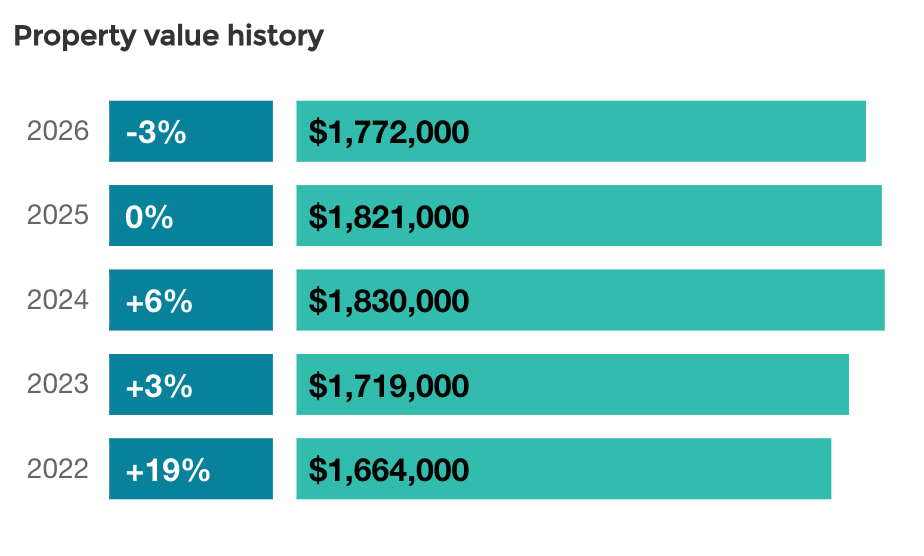
Example for 4580 CAMERON CRT RICHMOND
What Does the Assessed Value Mean?
The assessed value is BC Assessment’s estimate of a property’s market value as of July 1st of the prior year. It represents what BC Assessment believes the property would sell for on the open market at that time.
However, because the assessment is based on mass appraisal techniques and is set months in the past, it rarely matches the current market value exactly. The primary purpose of assessed value is to distribute the property tax burden fairly across property owners in your municipality.
It’s important to understand that assessed value is NOT what you should list your home for, and NOT what buyers should use to make an offer. While it can serve as one reference point among many, the assessed value is fundamentally a taxation tool, not a real estate pricing tool.
How is the Assessed Value Calculated?
BC Assessment uses a process called “mass appraisal” — a computer-assisted method that compares similar properties across large groups rather than individually appraising each home. This approach allows them to assess over 2 million properties across British Columbia efficiently.
The mass appraisal process analyzes:
- Recent sales data from properties similar to yours
- Physical property characteristics such as lot size, building size, and age
- Neighbourhood factors that affect value
- Property class (residential, strata, commercial, etc.)
The valuation date is always July 1st of the prior year. BC Assessment reviews individual properties, but assessors don’t visit every home each year. This means interior renovations, cosmetic upgrades, or condition issues that aren’t visible from the outside or recorded with the municipality may not be factored into your assessment.
For example, if many Burnaby condos in a similar building sold between January and June 2025, those sales help set the July 1st, 2025 value for all comparable units in that building and area.
Factors That Influence Assessed Value
BC Assessment considers several key factors when setting your property’s value:
- Location: Neighbourhood desirability, proximity to amenities, and access to transit all play a role
- Lot size and dimensions: Larger lots or those with favourable characteristics typically have higher values
- Building size, age, and condition: As visible or recorded by the municipality
- Property class: Whether it’s residential single-family, strata, or another classification
- Recent comparable sales: Sales of similar properties in your area inform the valuation
- Zoning and development potential: Properties with additional development options may be valued higher
What BC Assessment typically does NOT include are interior renovations or cosmetic upgrades that aren’t on file with the municipality. Since assessors don’t routinely inspect inside homes, features like a renovated kitchen, new flooring, or upgraded bathrooms may not be reflected in your assessed value.
How BC Assessment Affects Buyers and Sellers
Understanding how assessed value shows up in real estate transactions is important for both buyers and sellers in Metro Vancouver. Here’s what each party needs to know:
For Sellers
Buyers trying to negotiate may reference the assessed value. However, it’s not a reliable indicator of market value in Metro Vancouver, where sale prices often exceed assessed values significantly — sometimes by hundreds of thousands of dollars.
Property taxes are calculated based on assessed value, so sellers should be prepared to explain this to buyers who may not understand the distinction. In the statement of adjustments at closing, property taxes paid or owed are prorated based on the assessed value for the calendar year.
It’s common for sellers to feel concerned when their assessment drops or doesn’t keep pace with what they believe their home is worth. Remember that the assessment is backward-looking and doesn’t capture current market dynamics.
For Buyers
Do not use assessed value as the primary basis for making an offer. Instead, rely on recent comparable sales (or “comps”) from the past 60-90 days to understand what similar homes are actually selling for in today’s market.
The assessed value is publicly visible, so buyers can use it as one data point in their research. However, it should not anchor your expectations or serve as a negotiating tool on its own. A home assessed at $1.4 million might realistically sell for $1.7 million in the current market — or it might sell for $1.3 million if the market has softened since July 1st of the previous year.
Property tax estimates going forward will be based on assessed value. This is worth factoring into your affordability calculations when budgeting for homeownership.
Example: A detached home in East Vancouver assessed at $1.4M may sell for $1.7M in a strong market with high buyer demand. Conversely, in a cooling market, that same home might sell closer to or even below its assessed value. The key is understanding current market conditions, not relying on a six-month-old number.
How is This Different From Market Value?
There’s a clear and important distinction between assessed value and market value:
Assessed Value
Assessed value is a historical, government-set estimate used for tax purposes. It’s determined once per year based on conditions as of July 1st of the previous year using mass appraisal techniques.
Market Value
Market value is what a buyer is willing to pay and a seller is willing to accept right now, based on current market conditions. It’s determined by recent comparable sales, buyer demand, current economic conditions, and the specific attributes of your property.
Here’s a simple comparison:
| Assessed Value | Market Value |
| Set once per year (July 1st) | Changes constantly with market conditions |
| Used for property tax calculation | Used for real estate transactions |
| Based on mass appraisal of similar properties | Based on individual property appeal and current demand |
| Looks backward (6+ months old) | Reflects today’s market |
| Does not account for interior condition | Heavily influenced by the interior condition and presentation |
In a rising market, market value will likely exceed assessed value. In a falling or flat market, they may be closer together, or assessed value could temporarily exceed market value. This explains why your neighbour’s home sold for significantly more (or less) than its assessed value.
Factors That Influence Market Value
Market value is responsive to real-time conditions and buyer behaviour. Here are the key factors that determine what a home actually sells for:
- Recent comparable sales in the immediate neighbourhood (typically within the last 60-90 days)
- Current buyer demand and inventory levels: Multiple offers versus slow sales
- Interest rates and mortgage affordability: Higher rates typically dampen buyer purchasing power
- Condition and presentation: Staging, renovations, and curb appeal matter significantly
- Time of year and seasonality: Spring and fall are typically more active than winter
- Unique features: Views, lot size, suite potential, extra parking, or laneway house potential
- Broader economic conditions: Employment rates, consumer confidence, and economic outlook
Unlike assessed value, market value captures the emotional and competitive aspects of real estate. Two identical homes can sell for different prices based on timing, marketing, and how well they’re presented to buyers.
Understanding the Differences From Market Value to Assessed Value
Let’s look at real-world scenarios where assessed value and market value diverge, and what it means for you.
When the Home’s Market Price Is Below the Assessed Value
This situation can happen in a cooling market, when a specific neighbourhood experiences a decline, or when a property has issues that affect its appeal.
Important to know: This does NOT mean the homeowner owes extra taxes or is “underwater” on paper. Your property taxes are calculated based on your assessed value relative to other properties in your municipality, not on an absolute dollar amount.
Sellers should not feel pressured to accept offers below market value just because they come in below the assessed value. The assessed value is not a floor price — it’s simply a taxation reference point from six months ago.
For buyers, a home selling below assessed value is not automatically a bargain signal. You should investigate why the price is lower. It could indicate:
- Market conditions have softened since July 1st of the previous year
- The property has specific issues (location, condition, strata problems)
- The assessed value was too high to begin with
Example
In a slower market, a Richmond townhouse assessed at $820,000 might sell for $780,000 if comparable sales in the area have softened since the July 1st valuation date. This doesn’t mean something is wrong with the property. It simply reflects current market realities.
When the Home’s Market Price Is Above the Assessed Value
This is the more common scenario in Metro Vancouver, especially for detached homes in desirable neighbourhoods. In a competitive, supply-constrained market, homes frequently sell for well above their assessed value. This is normal and expected.
Buyers should not be surprised or alarmed when this happens. Assessed value lagging behind market value is typical in a rising market. The six-month time lag between valuation date and sale date, combined with strong buyer demand, often creates this gap.
Sellers shouldn’t price their home based on assessed value alone. Work with a REALTOR® to conduct a comparative market analysis (CMA) using recent comparable sales to determine the right listing strategy.
Example
A Richmond detached home assessed at $1.1M might list at and sell for $1.35M or more based on current comparable sales and limited inventory. The $250,000 difference reflects six months of market appreciation plus competitive buyer activity.
In some hot markets, homes have sold 20-30% above assessed value. While this might seem dramatic, it simply reflects the reality that assessments are based on July 1st data, and that the market has moved significantly since then.
Should You Buy or Sell at That Price?
The BC Assessment value should not be used as a listing price or offer price on its own. Here’s the right approach to pricing decisions:
For Sellers
Work with a real estate professional to conduct a CMA using recent comparable sales from the past 60-90 days. Your REALTOR® will consider:
- Recent sales of similar properties in your immediate area
- Current active listings (your competition)
- Market trends and buyer demand
- Your property’s specific features and condition
- Your timeline and real estate goals
The assessed value can be one of many reference points in this analysis, but it should not drive your listing price. Your REALTOR® will help you develop a pricing strategy that positions your home competitively in the current market.
For Buyers
Use recent comparable sales from the past 60-90 days in the immediate area to understand what the home is actually worth today. Don’t anchor your offer to the assessed value. Doing so often leads to disappointment when you’re competing against other buyers who understand market value.
Your REALTOR® can provide a CMA that shows you what similar homes have sold for recently. This will help you make an informed offer that’s competitive without overpaying.
Understanding Different Valuation Tools
It’s helpful to understand that there are three different tools for determining property value, each serving a different purpose:
- BC Assessment: Used for property taxation, based on July 1st of the prior year
- Professional Appraisal: Used for mortgage financing, conducted by a certified appraiser who physically inspects the property
- Realtor CMA: Used for buying/selling decisions, based on recent comparable sales and current market conditions
All three can show different values for the same property because they serve different purposes and use different methods. For real estate transactions, the realtor CMA based on current comparable sales is your most relevant tool.
Final Thoughts
BC Assessment value and market value are two different things. Understanding this difference helps buyers and sellers navigate the Metro Vancouver real estate market with more confidence.
Remember that assessed value is a taxation tool looking backward six months. Market value, on the other hand, reflects what buyers are willing to pay today.
Whether you’re buying or selling, working with a knowledgeable real estate professional who understands the local Metro Vancouver market will help you make informed decisions based on current market conditions.
If you have questions about what your home could sell for or what you should offer on a property, reach out to us and find out how we can help you navigate your real estate journey in the Lower Mainland.
